
ROD vs. water tanks

It is a well-known opinion that finding a cheap and good plot of land today borders on a miracle. However, many people go to great lengths to own their own home with a large garden or recreational area. However, one should be aware that not everyone can afford their own piece of land. This applies, for example, to a significant number of residents of large cities, whose only property is an apartment. However, in the areas of Polish metropolises, public green spaces are scarce. The situation can only be saved by the Family Allotment Gardens, which, thanks to planned support from the EU, will help city dwellers breathe. What kind of assistance can be expected, and how does it relate to water tanks?
It is a well-known opinion that finding a cheap and good plot of land today borders on a miracle. However, many people go to great lengths to own their own home with a large garden or recreational area. However, one should be aware that not everyone can afford their own piece of land. This applies, for example, to a significant number of residents of large cities, whose only property is an apartment. However, in the areas of Polish metropolises, public green spaces are scarce. The situation can only be saved by the Family Allotment Gardens, which, thanks to planned support from the EU, will help city dwellers breathe. What kind of support can be expected, and what connection does it have with water tanks?
Assumptions of the support program for RODs
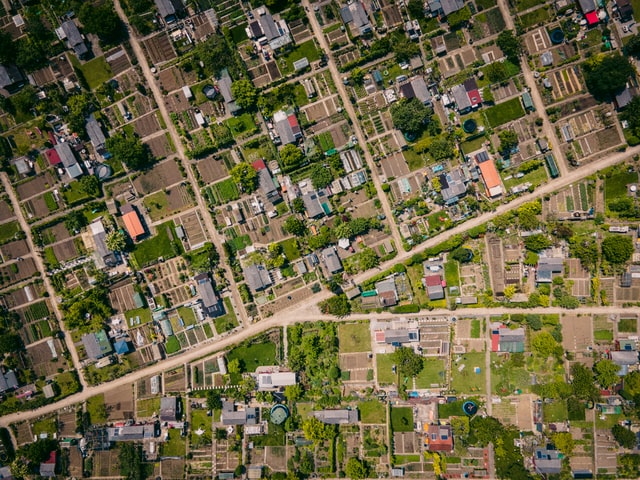
The European Union envisages providing funds to the tune of 50 million zlotys for increasing green areas and measures to reduce noise and improve air quality. This is how urban ecosystems are largely affected by allotment gardens. What's more, they help lower the temperature somewhat in their vicinity and can prevent excessive rainwater runoff. Between PLN 10,000 and 100,000 can be allocated per recipient. Importantly, the direct beneficiaries are the associations running RODs. What projects can be allocated funds for under this EU aid?
Initially announced assumptions of the program in question say that funds can be allocated for the construction of energy and water and sewage infrastructure, as well as for other projects that will show a pro-health and pro-social impact. We are talking about renewable energy sources, setting aside recreational areas with plenty of vegetation or using water retention systems. The latter, however, is particularly important for the operation of large cities.
Advantages of rainwater retention
The biggest advantage of such a program is precisely the subsidization of any systems that are used to collect and store rainwater. Thanks to such solutions, allotment holders will be able to use rainwater without using water from the municipal intake. This saves a lot of money, not only money, but most importantly shared resources. After all, it is not known for a long time that the level of groundwater is steadily declining, and increasingly frequent droughts do not help to improve such a state of affairs. In addition, temporary excess water, such as during heavy rainfall, is a common phenomenon in the city. This causes local flooding, as manholes, either polluted or unsuitable for high flow, do not solve the problem, but actually exacerbate it. Receiving some of the rainwater further relieves the pressure on flooded manholes, thus preventing the negative effects of heavy rainfall.
But how can you prepare the simplest system for collecting water on your plot? The best solution would be to get watertight water tanks with appropriate holes and connect them to the gutters on the gazebo roof. This way, during any downpour, the water from the canopy will flow directly into the tank, and you can use it on days without rain. It is also a good idea to opt for tanks with additional holes, such as for a faucet or garden hose connection. Due to the fact that sometimes gardens are small or have an unusual shape or terrain, it is worth ordering a water tank dedicated specifically for our plot. Especially since this is a subsidized measure, so you should bet on professional solutions.
Most people reacted very positively to the news of EU support for Family Allotment Gardens. This is a signal that the European community appreciates activities also on a micro scale. Since it is primarily in cities that the problem of air pollution is complained about, as well as difficulties in water management, the subsidy for RODs can bring visible results in improving the urban microclimate - so it is worth taking advantage of it!